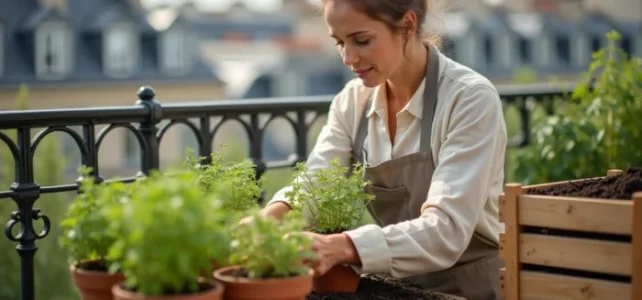
Growing vegetables on a balcony or in a small yard involves dealing with constraints that most traditional gardening guides do not address: the weight of containers, the actual quality of the soil, and co-ownership regulations. An urban garden is not just about placing a few pots on a windowsill. Even before choosing your plants, several checks determine the viability of the project over a full year.
Urban Soil Pollution: The Diagnosis No One Makes Before Planting
Competitors talk about containers, varieties, and schedules. None ask the preliminary question: is your soil healthy? In an urban context, this question conditions everything else.
In 2022, Anses updated its guide “Gardening in the City While Limiting Health Risks.” The document recommends having the soil analyzed in a laboratory for gardens located near heavily trafficked roads or former industrial sites. The contaminants sought are lead, cadmium, and polycyclic aromatic hydrocarbons (PAHs).
If you are growing in the ground in a yard or shared garden, this analysis costs a few dozen euros and can prevent you from absorbing heavy metals through your harvests of salads or leafy vegetables. Root vegetables and leafy greens concentrate more pollutants than fruiting vegetables like tomatoes or peppers.
For those who grow exclusively in raised beds, the risk decreases provided you use new substrate and do not place the containers directly on polluted soil without a waterproof barrier. The practical sheets available on Spot Jardin detail several off-ground growing configurations suited to these situations.
Co-Ownership Regulations and Permits for Greening: The Legal Framework for Balcony Gardens
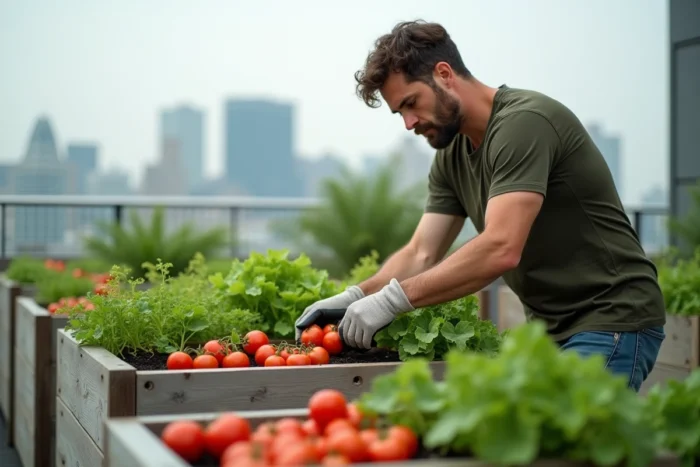
Installing heavy planters on a balcony engages your responsibility towards the co-ownership and the public road. More and more municipalities regulate the greening of facades.
The weight of the containers is the first constraint to check. A growing container filled with moist soil weighs much more than one might think. Co-ownership regulations often set a maximum load per square meter for balconies, which is rarely consulted by amateur gardeners.
In Paris, the “Permit to Green” was updated in 2023. It specifies the conditions for using vegetable containers in public spaces: allowed substrates, prohibition of pesticides, watering methods. Other municipalities offer similar provisions, with charters that define mandatory fixings for facade planters and the collection of watering water to prevent runoff onto public roads.
Before starting your urban garden on a balcony, check three elements:
- The maximum load allowed by the co-ownership regulations for your balcony or terrace, expressed in kilograms per square meter
- The obligations for securing planters on the facade, which vary according to the height of the floor and exposure to wind
- The existence of a permit to green or a municipal charter in your municipality, which can facilitate the project while imposing health constraints
Substrate and Growing Space: Adapting the Soil to the Size of the Pot
Classic garden soil is not suitable for balcony containers. Too compact, it suffocates in a pot and retains water to the point of rotting the roots. The choice of substrate directly determines the success of your crops.
A lightweight mix combining potting soil, compost, and a draining material (perlite, pumice, clay balls) works better in pots than raw topsoil. This type of substrate allows roots to develop in a restricted space while maintaining a balance between water retention and drainage.
The depth of the container conditions the choice of vegetables. Salads and herbs are satisfied with shallow pots. Tomatoes, zucchinis, and peppers require containers at least thirty centimeters deep to develop a viable root system.
What Vegetables to Grow in a Small Space All Year Round
Rotating crops throughout the seasons remains the main lever for harvesting all year round, even on a balcony. Leafy vegetables like spinach and lamb’s lettuce tolerate cold and can occupy your pots from autumn to early spring. In summer, cherry tomatoes, radishes, and dwarf beans take over.
Field reports vary on the actual productivity of a balcony garden in winter. Limited sunlight (less than four hours of direct light per day in December in northern France) significantly reduces growth. Persistent herbs (thyme, rosemary, chives) and some hardy leafy vegetables represent the most reliable options for maintaining gardening activity between November and February.
Water Management on Balconies: Watering and Recovery Without Waste
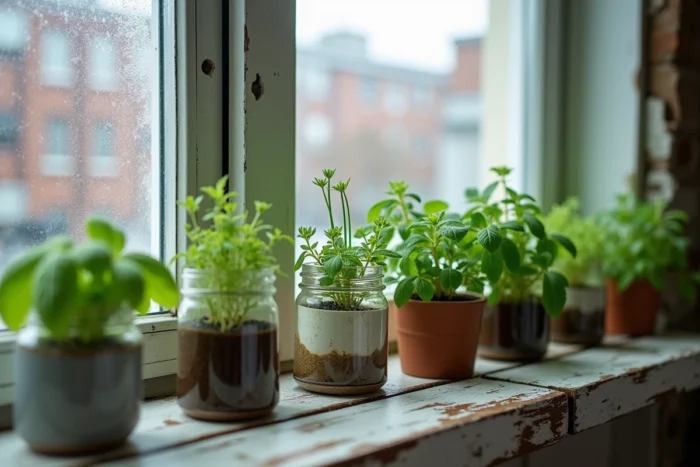
Watering is the most time-consuming aspect of an urban garden, especially in summer. Pots dry out faster than ground soil, and forgetting to water for a few days is enough to lose a harvest.
A drip irrigation system connected to a timer solves most problems for balconies equipped with an outdoor faucet. For others, oyas (clay pots buried in the substrate) slowly diffuse water and reduce the frequency of watering.
Mulching the surface of the pot, with fragmented branch wood or straw, limits evaporation. This technique, common in ground soil, remains underutilized in pot culture even though it significantly reduces water needs during hot months.
One last point deserves attention: water runoff after watering. On an upper-floor balcony, water that drains from the pots ends up on the neighbor’s balcony or on the facade. Saucers and retention trays are not just an aesthetic detail; they prevent neighborly conflicts and damage to the building. Some municipal greening charters even require a system for collecting watering water.
Successfully maintaining an urban garden all year round relies less on the choice of varieties than on prior preparation: analyzing the soil, checking building constraints, adapting the substrate to the container. The most costly mistakes occur even before the first sowing.