In cooking, conversion errors can turn a promising recipe into a true culinary disaster. Whether it’s converting ounces to grams or adjusting cooking temperatures, these small mistakes can have significant consequences.
Imagine a cake whose perfect texture relies on precise proportions. A simple mix-up between milliliters and centiliters can make the batter too runny or too dense. Therefore, cooking enthusiasts must pay extra attention when juggling different units of measurement to ensure they achieve the desired result.
Common Measurement Conversion Errors in Cooking
Conversion errors in cooking are numerous and often a source of frustration. Consider these frequent situations:
- Confusion between volume units: it’s not uncommon to see recipes mention volumes in milliliters while others use liters. For example, knowing how to convert 500 ml to liters can prevent many culinary disasters.
- Issues with weight units: American recipes often use ounces, while European recipes prefer grams. An incorrect conversion can alter the taste and texture of your dish.
- Temperature differences: European ovens indicate temperatures in degrees Celsius, while American ovens use degrees Fahrenheit. An incorrect conversion can lead to improper cooking.
Conversion Tools to Use
To avoid these errors, use reliable conversion tools. Conversion charts are helpful:
| Volume | Conversion |
|---|---|
| 1 liter | 1000 ml |
| 500 ml | 0.5 liter |
Mobile apps dedicated to cooking offer built-in conversion features and can be very convenient.
Precautions to Take
Accuracy is fundamental in cooking. Use electronic scales for dry ingredients and measuring cups for liquids. Always check your conversions and don’t hesitate to experiment to ensure that the proportions are respected. Rigor in these steps guarantees a result faithful to the original recipe.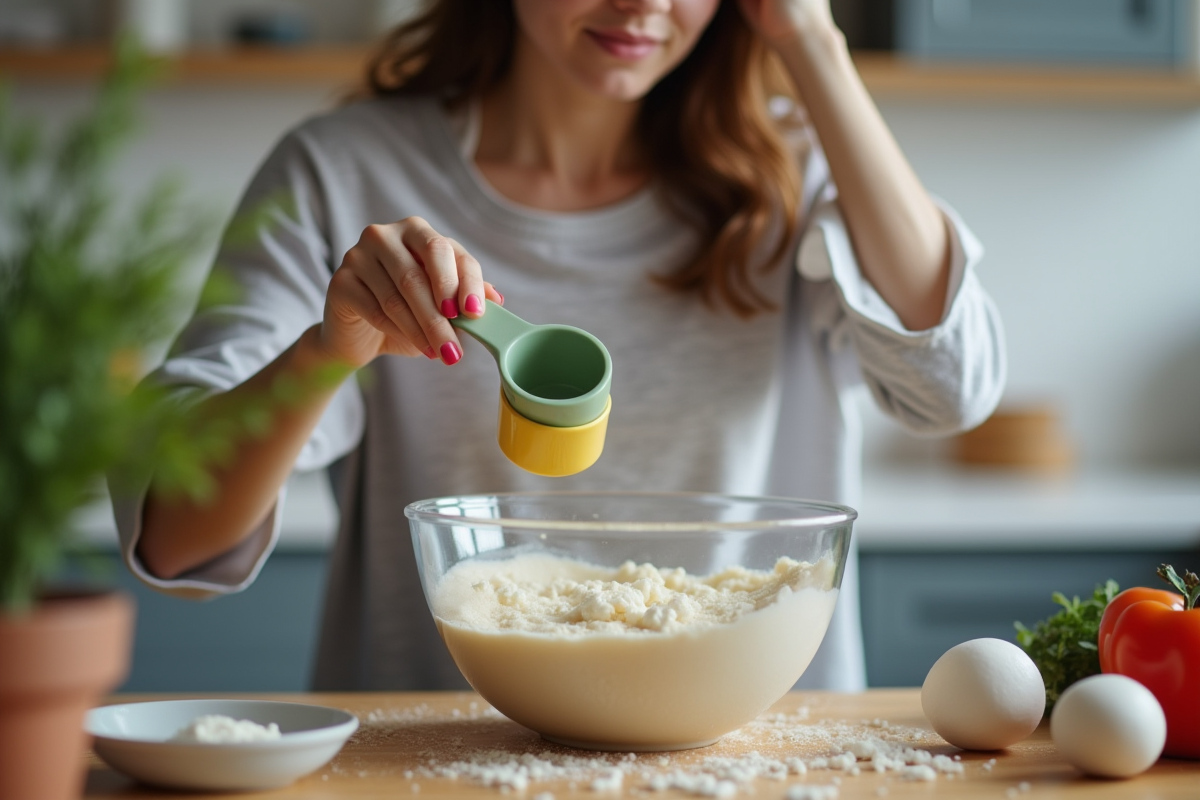
How to Avoid Conversion Errors and Succeed in Your Recipes
To succeed in your recipes, follow a few fundamental principles. Use precision tools. Electronic scales, measuring cups, and measuring spoons help ensure accurate measurements. Prefer tools designed for the specific units of your recipe.
Always check conversions before starting. Consult conversion charts or use reliable apps. A simple search allows you to find the exact matches between units (grams, ounces, milliliters, liters, etc.).
Examples of Common Conversions
| Unit | Equivalence |
|---|---|
| 1 cup (US) | 240 ml |
| 1 ounce (oz) | 28.35 g |
| 1 pound (lb) | 454 g |
Anticipating Temperature Variations
Temperature conversions are also significant. Make sure you know the equivalence between Celsius and Fahrenheit. For example, to convert 180°C to Fahrenheit, multiply by 9, divide by 5, and add 32. 180°C is equivalent to 356°F.
Adapting Recipes
Adapt recipes according to your needs. If an American recipe calls for 1 cup of flour, convert this measurement to grams for more precision. Generally, 1 cup of flour equals 120 grams.
By applying these best practices, you will significantly reduce conversion errors and ensure the success of your dishes.